
I've shipped features that took 3 months. I've also shipped things in a day that would've taken 3 months a year ago. I'm still figuring out what that means.
When I joined the AI space at Attri, I thought the hardest part of the job would be understanding the technology.
I was wrong.
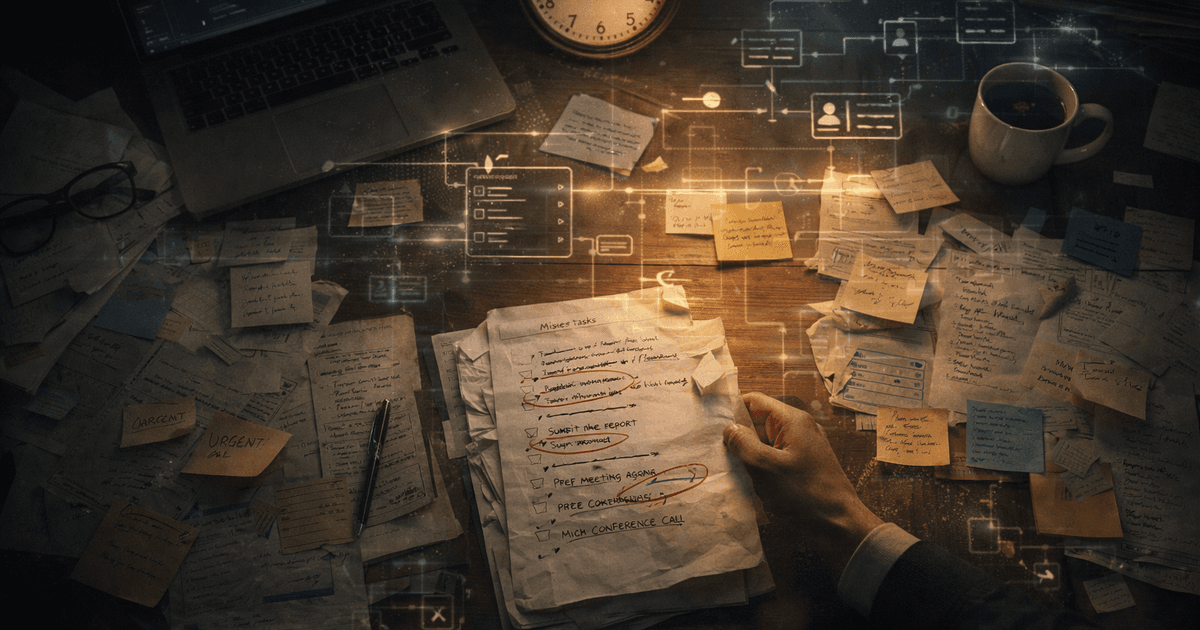
The hardest part is talking to a user, watching them do something painfully manual, something that burns 4 hours a week of their life, and realizing an AI agent could do it in 4 minutes, and then figuring out why they'd never trust it to.
That's the job nobody writes about.
The first thing I got wrong
Early on, I was obsessed with the model.
Which LLM? What context window? How's the accuracy on edge cases? I spent a lot of time in that world, benchmarks, evals, comparisons. It felt productive. It felt like I was doing the work.
But the features I built from that mindset? Underwhelming. Not because the AI wasn't good. Because I'd solved the wrong problem.
The real question was never "what can the AI do?"
It was "where does this team's work actually fall apart?"
Once I started asking that, really asking it, sitting with people, watching workflows, mapping handoffs, everything changed. The AI became a tool again instead of the answer. And the products got better.
What nobody tells you about building with AI
Here's something I wish someone had told me on day one: users don't care about your model. They care about their Tuesday.
They have a Tuesday where 14 things need to happen and 6 of them are going to fall through the cracks because there aren't enough hours. That's the problem. That's the only problem.
Your job as an AI PM is to find those 6 things and make them not fall through.
At Attri, we work with businesses where the gap between "what was supposed to happen" and "what actually happened" costs real money, missed follow-ups, things slipping between systems, work that lived in someone's head and died when they got busy. The teams aren't failing because they're bad at their jobs. They're failing because no workflow survives contact with a full calendar.
That's where I've learned the most about what good AI product actually is.
It's not impressive. It's invisible. It just works, quietly, in the background, and the person using it barely notices except that their Tuesday got a little less chaotic.
The moment the job changed for me
There was a specific moment when my understanding of this role shifted.
We were deep in a process review with a client. Mapping out how referrals moved through their system. On paper it looked fine, a clear path, defined steps, responsible owners. Clean.
Then we asked: "What happens when someone's out sick?"
Silence.
Then a slow exhale. "It waits. Or someone catches it. Sometimes it falls."
That one question unlocked six months of product work. The gap wasn't a tech gap. It wasn't even a people gap. It was a handoff gap, the invisible moment where something moves from one person to another and no one is watching.
No AI benchmark tells you where that is. You have to go find it.
What I think is actually happening in AI product right now
We're in a strange in-between moment.
The technology has genuinely leapfrogged our ability to deploy it well. Models can reason, plan, take action, use tools, write code, fill forms, make calls. The capability is there. The infrastructure is catching up fast.
But most companies are still using AI like it's a smarter search bar.
The teams that are pulling ahead aren't the ones with the best models. They're the ones who've figured out where to point it. They've done the hard, unsexy work of mapping their actual processes, not the documented ones, the real ones, and finding the three places where an agent can quietly eliminate 80% of the friction.
That's the product work that matters right now. Not prompt engineering. Not model selection.
Process archaeology.
What I've learned about users and trust
AI can do a lot. Users will let it do a little, at first.
This took me longer to accept than it should have. I'd build something genuinely useful, something that saved real time, and users would still want to review every output. Double-check every action. Keep one hand on the wheel.
I used to find this frustrating. Now I think it's completely rational.
You're asking someone to hand control of their work to something they can't fully predict. Of course they're cautious. The job isn't to eliminate that caution, it's to earn your way through it, one small win at a time.
Start with the low-stakes stuff. Let them see it work. Let them catch it when it doesn't. Build the feedback loop. Then expand.
Trust is the real product. The AI is just how you deliver it.
Where I think this goes
I don't think the AI PM role stabilizes anytime soon.
The surface area keeps expanding. Agents that take real actions in the world, not just generating text, but clicking, submitting, scheduling, purchasing, are going to force a completely new set of product questions around consent, audit, and accountability.
Who approved this? Can I undo it? What did the agent decide and why?
That's the frontier I'm most interested in. Not because it's technically exciting, though it is, but because the answers are almost entirely human problems. Design problems. Trust problems. Workflow problems.
The same problems PMs have always solved. Just with higher stakes and weirder edge cases.
I don't have a clean framework to wrap this up with.
What I have is this: the teams doing the best AI product work I've seen aren't chasing the newest model or the flashiest demo. They're doing the slow work of understanding where things break, and building something quiet and reliable to fix it.
That's the job.
It's a good one.