I looked at a competitor's product yesterday.
Beautiful. Charts, sidebars, notification bells, three levels of dropdown menus.
Also: completely obsolete.
We are still building software on a 2015 premise, the user doesn't know what they want, so let's give them a menu with everything.
In 2026, the user knows exactly what they want. They want the answer.
Here is what changed while we were busy refining nav bars:
OpenAI shipped Operator. Anthropic shipped Computer Use. Both can already navigate your dashboards better than your users can. Let that land for a second. The most sophisticated interfaces we built — the ones with nested dropdowns and export buttons — are now being operated by agents, not humans.
The interface was never for the user. It was a workaround for the model not existing yet.
That model exists now.
This is the shift Generative UI (GenUI) is built on. The interface is no longer a map you hand someone. It is a response the system composes — on demand, for that question, then gone.
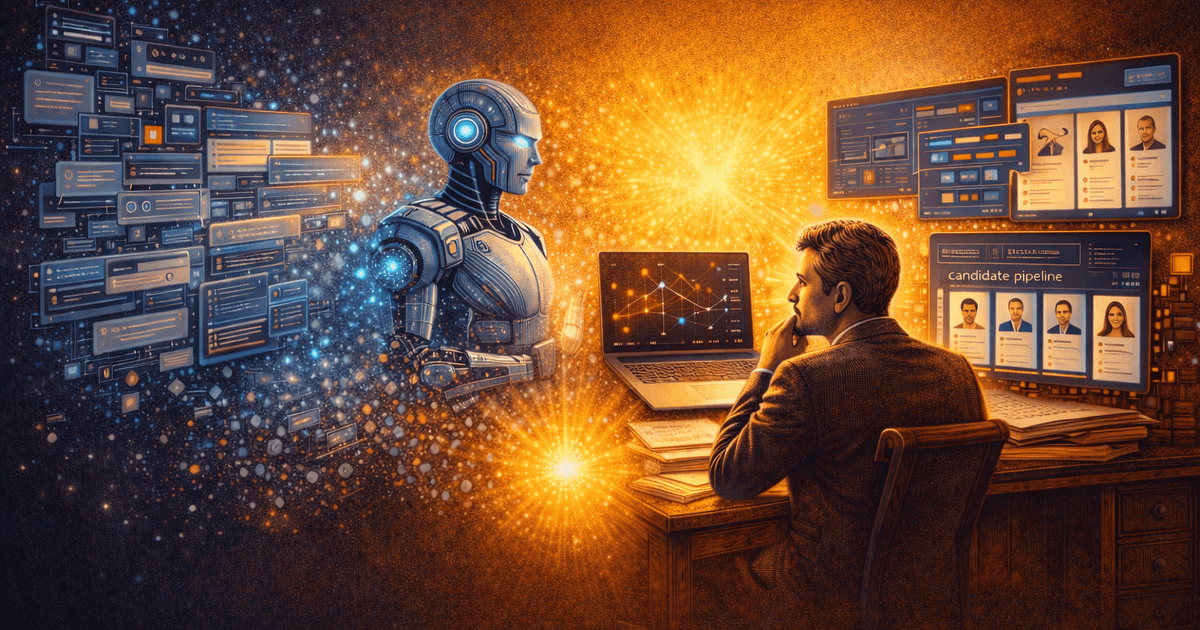
A sales leader doesn't navigate to Reports → Q1 → Deals → Export. They ask: "Show me the riskiest deals this quarter." The AI reasons over the data, draws a scatter plot of deal size versus risk, renders action buttons for those specific clients — and ten minutes later, when the question changes to hiring, that chart dissolves and a candidate pipeline appears in its place.
Vercel's v0 is doing this for developers. Bolt and Replit are doing it for prototypes. The next step is doing it for users — in production — in real workflows.
Ephemeral Interfaces
For a lawyer mid-contract review, a static dashboard is noise. They need a UI that surfaces a redlining tool the moment risk appears in a clause, and disappears when they go back to reading.
No navigation. No settings. Just the right surface at the right moment. We call these Ephemeral Interfaces: composable UI layers the model generates in response to context, not in response to a developer's prediction of what the user might want to see.
The shift, in one line:
Stop designing screens. Start designing systems that design screens.
The firms and products that understand this — that the interface is now a deliverable of the model, not a prerequisite to it — will not need to redesign their UX in three years.
Everyone else will be rebuilding from scratch.
If this piece changed how you think about software, consider sharing it.